Reading the architecture of grand Paris
Broad streets, repeating balconies, corner buildings and long views form a visual language. Discover why Paris’s layout changed and how new spaces shaped daily life. The Second Empire is central to the story, but not every building dates from it: Place Vendôme is older, La Madeleine developed across several periods and Palais Garnier opened after the Empire fell. We distinguish these layers rather than crediting the whole district to one date or architect.
Palais Garnier from outside
Meet at an accessible public point in Place de l’Opéra; the exact landmark follows your enquiry. Explore the sculptures, columns and theatrical composition of a façade designed to impress before a performance begins. Hear how the theatre became a meeting place and a symbol of grand Paris. The interiors, grand staircase and auditorium are excluded. Interior visits require separate planning under the Paris Opéra’s conditions. This street tour grants no building access and promises neither queue-free entry nor room availability.
Boulevard des Capucines and Boulevard de la Madeleine
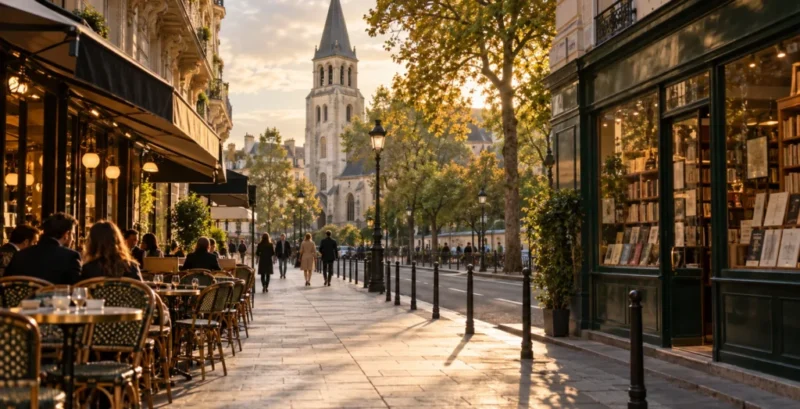
Follow the boulevards to discover Haussmann’s Paris: street widths, rhythmic façades, vistas and a new culture of strolling. Stops allow us to compare details easily missed while walking. Cafés and shop windows belong to the streetscape. Coffee, tastings, purchases and venue visits are excluded; fashion history does not turn this architecture walk into a shopping itinerary.
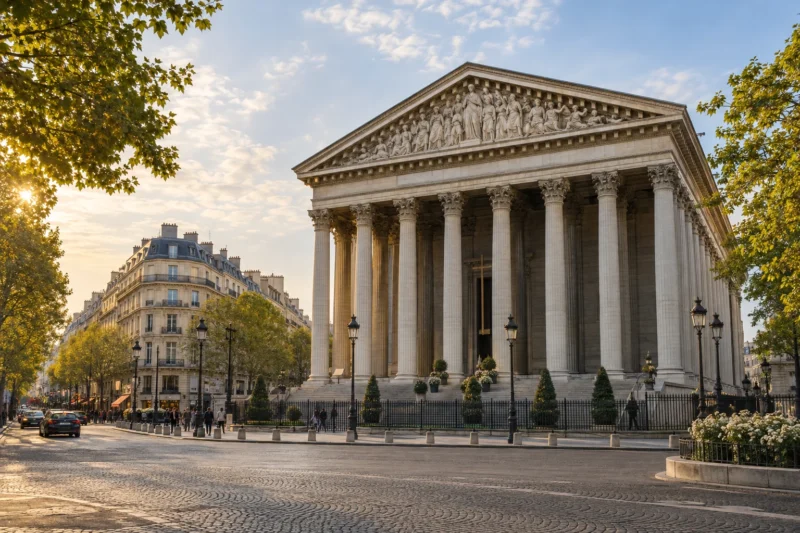
La Madeleine and Rue Saint-Honoré
View the church from outside and see how its monumental form organises the square. Continue towards Rue Saint-Honoré, contrasting a broad boulevard with a more intimate street. La Madeleine is a working church; entering it is outside the standard route and does not determine our schedule. We stay on public pavements, without promises of private courtyards, hotel interiors or boutique access.
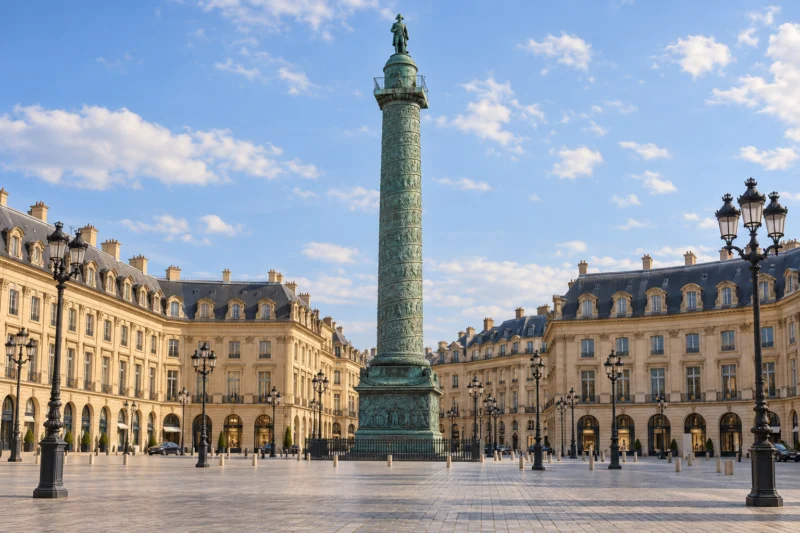
Place Vendôme and Rue de la Paix
Study the square’s design and column, then explore how architecture and jewellery houses shaped its reputation. Distinguish urban history from today’s image of luxury. Rue de la Paix, literally “Peace Street”, connects the square with the Opéra and provides our route back. Finish near Place de l’Opéra, where you can continue independently.
Choosing this walk
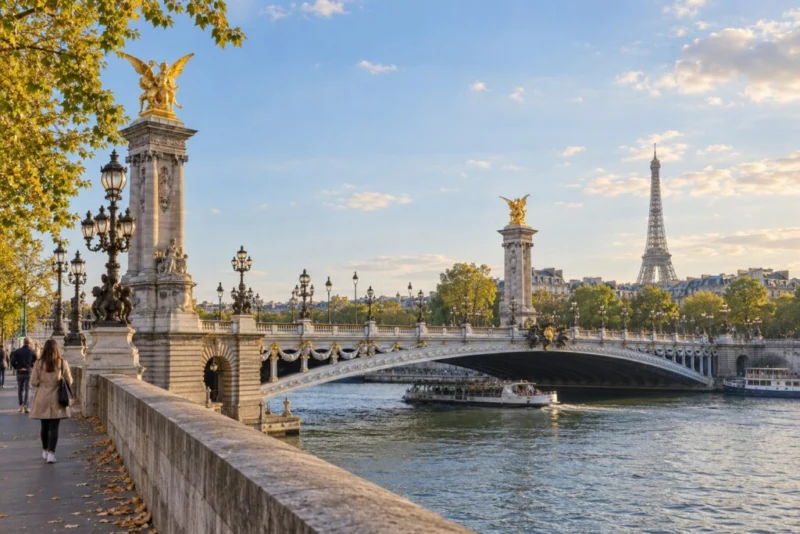
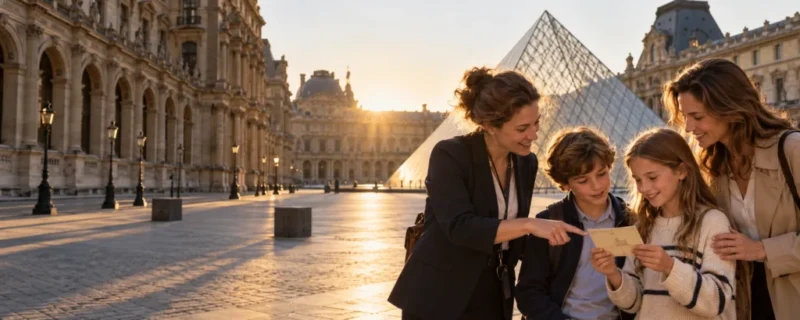
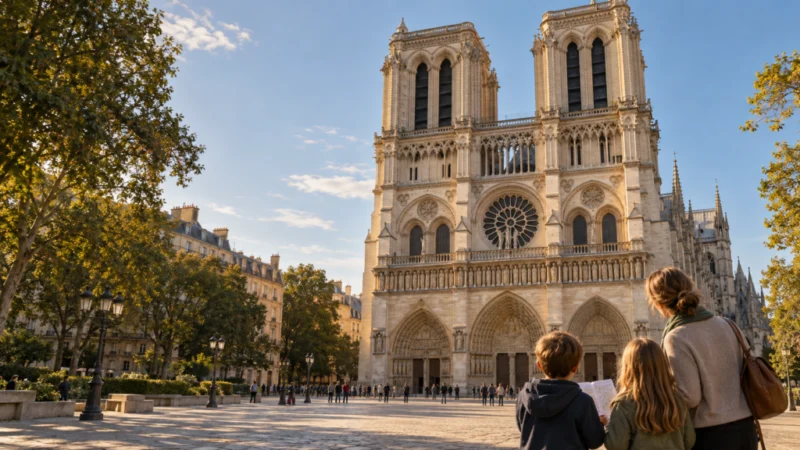
This tour suits an interest in boulevard architecture beyond the shop windows. It complements a city introduction. For the Seine, Île de la Cité and Louvre, choose Paris in two hours; for the Louvre, Tuileries and Pont Alexandre III, choose Classic Paris. This programme does not reach the Eiffel Tower, enter museum galleries or include the riverbanks. Its focus is the Opéra, boulevards, La Madeleine, Rue Saint-Honoré, Place Vendôme and Rue de la Paix. Questions are welcome throughout.
Preparing for the walk
Allow around two hours, with busy street crossings and pavement stops. Wear comfortable shoes and weather-appropriate clothes. Daylight is better for viewing façades; quiet streets are not guaranteed. Restrictions or roadworks may require a short detour without changing the theme. Discuss mobility, children and pace before booking. This is not a dedicated children’s programme. We agree the tour language when booking. No admission tickets are required for the standard outdoor route; prices and available formats appear in the booking section.





 Артём
 Anastasia
 Aleksandra