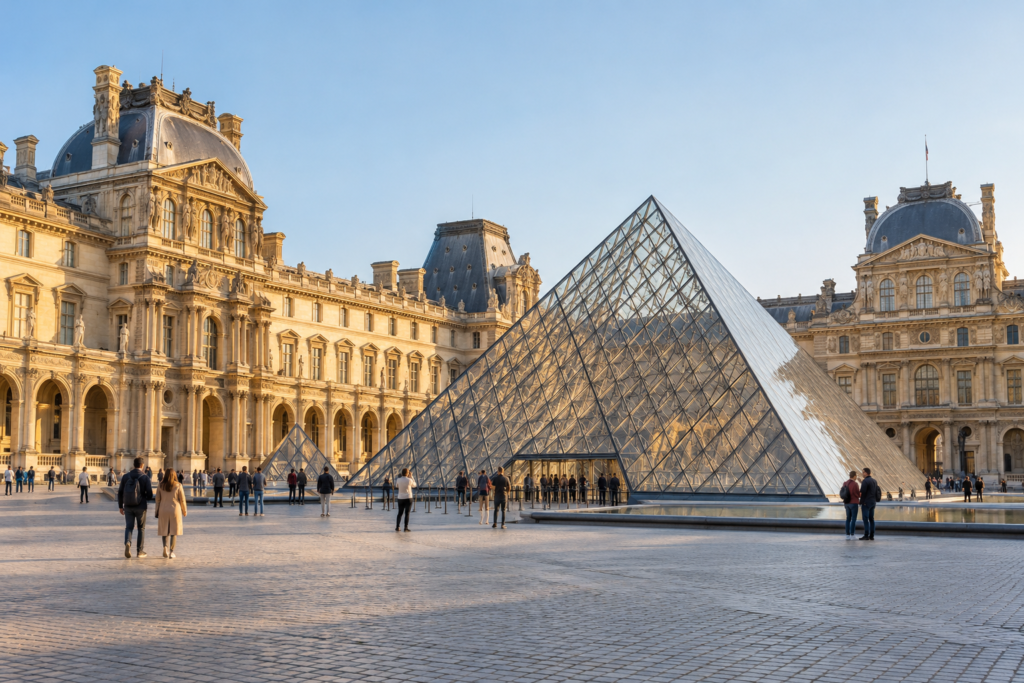
On a first Louvre visit, it is tempting to see everything: the Mona Lisa, ancient sculptures, vast history paintings and grand palace rooms. Yet a few works you have time to look at closely and understand often leave the strongest memories.
Start with a short list of works that interest you. These first-visit highlights explain what to look for and help you plan your own visit or choose a museum tour.
Must-see works at the Louvre
Ancient sculpture and European painting make a useful starting point. This selection includes eight works, but you need not see them all in one visit. Choose your favourites and leave time for walking between galleries and pausing.
1. Mona Lisa: look beyond the smile
Leonardo da Vinci’s portrait is a major reason many travellers visit. Notice the gentle transitions between light and shadow, the position of the hands and the unusual landscape behind the sitter.
The softly blurred outlines come from sfumato: contours seem to dissolve into the air. Look a little longer and consider why her expression appears to change.
Museum reference: Salle des États, Denon wing, Level 1. Arrangements for approaching the painting depend on visitor numbers.
2. The Wedding Feast at Cana: look across the room
Paolo Veronese’s enormous canvas hangs in the same room. Beside Leonardo’s intimate portrait, it feels like a theatrical production, full of architecture, guests, musicians, gestures and smaller scenes.
Take in the whole composition before choosing a few figures to study. The contrast is fascinating: one artist tells a story through a quiet human presence, the other through a crowded spectacle.
Check the Louvre’s official room information for the location of both paintings.
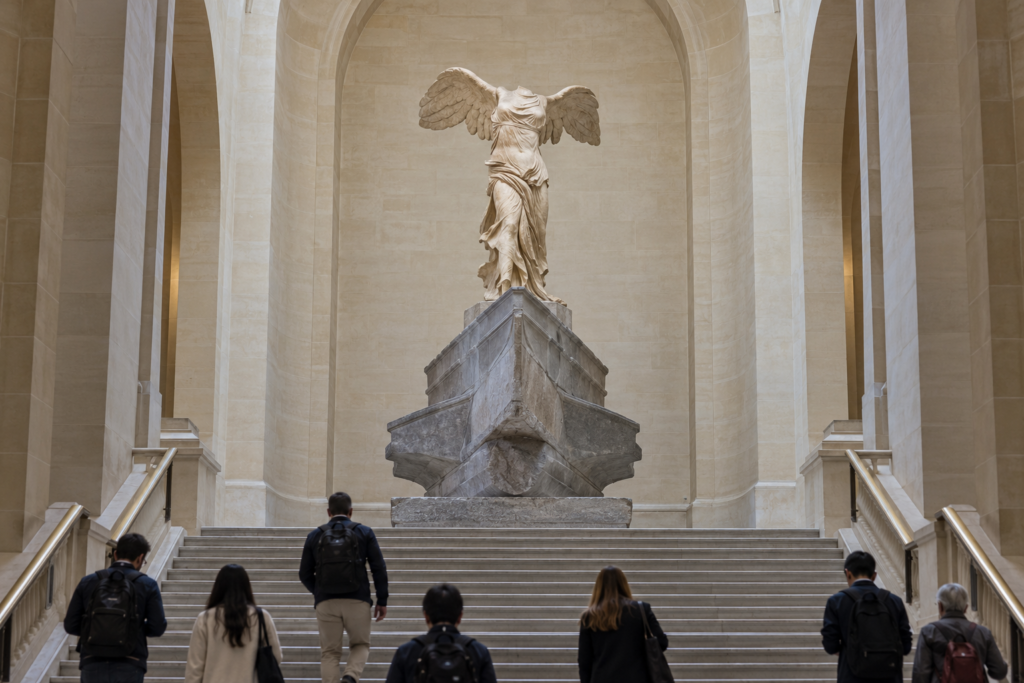
3. Winged Victory of Samothrace: movement in marble
The winged goddess of victory stands above the Daru staircase. Though her head and arms are missing, her pose, wings and flowing drapery create a powerful sense of movement into the wind.
Notice the base shaped like a ship’s prow. Sculpture, pedestal and staircase work together, so step back as well as looking at the details. The museum’s resources explain the work’s history.
4. Venus de Milo: balance and a turning pose
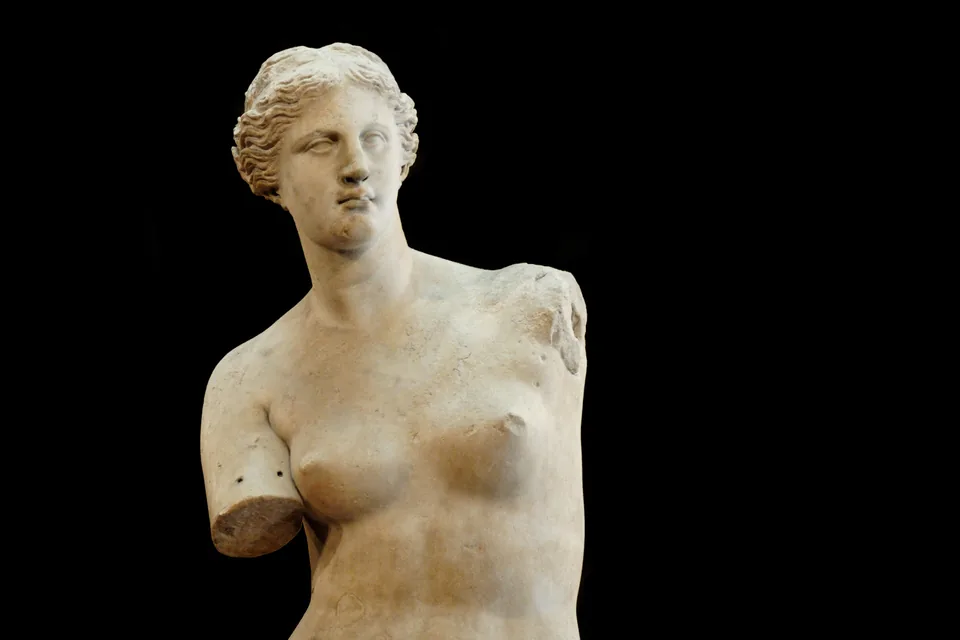
Venus de Milo reveals another side of ancient sculpture. After the energy of Winged Victory, notice the calm stance, shifting weight and gentle turn of the body.
Look from several accessible viewpoints to see how the silhouette changes. The missing arms remain part of the work’s mystery; scholars continue to discuss the original gesture. Read more in the Louvre’s account of the statue.
5. The Coronation of Napoleon: who is at the centre?
Jacques-Louis David’s large canvas first catches the eye with sumptuous costumes and ceremony. Look more closely at the central action: Napoleon is crowning Joséphine.
Consider how art constructs an image of power. Who occupies the centre? Where do the figures look? How does the cathedral setting turn the event into a carefully staged scene?
6. The Raft of the Medusa: follow the composition
Théodore Géricault’s painting contrasts despair with hope. Follow the poses, hands and lines of sight from the lower part of the canvas towards the figures at the top.
This is an emotionally challenging work based on a real shipwreck. For a family visit, adapt the detail of the story to the children’s ages.
7. Liberty Leading the People: the event behind the symbol
You may recognise Eugène Delacroix’s painting before arriving. In the gallery, appreciate its scale and the way the artist brings together real participants in a street uprising and the allegorical figure of Liberty.
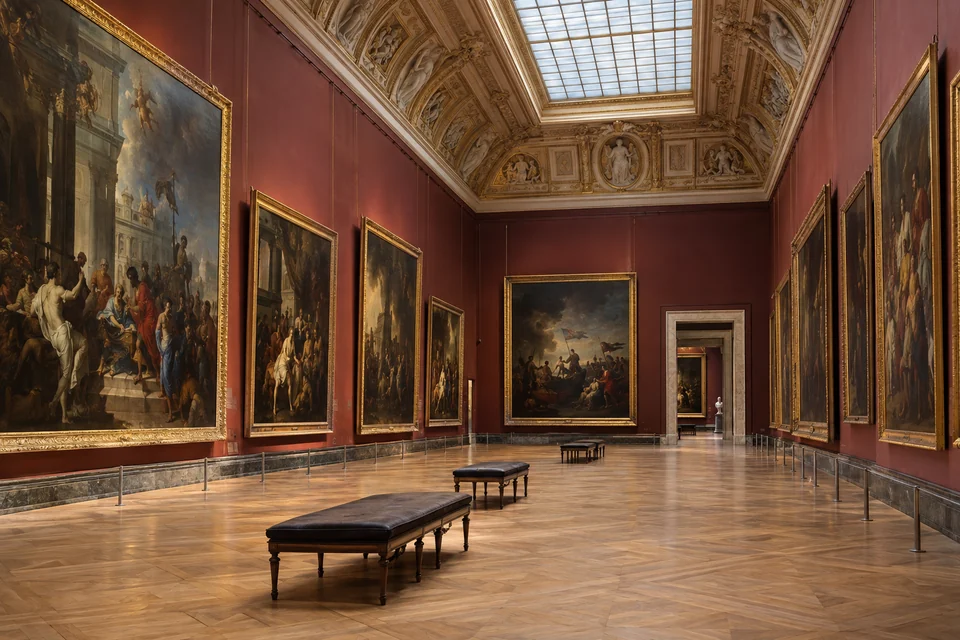
It depicts the July Revolution of 1830, rather than the events of 1789. That context makes the image clearer. These French paintings feature in the Louvre’s overview of its Red Rooms.
8. Psyche Revived by Cupid’s Kiss: changing viewpoints
Antonio Canova’s sculpture invites a more intimate encounter. Notice the interlacing arms, tilted heads and carefully balanced figures.
If space allows, walk around the sculpture while respecting barriers and distance. From another viewpoint the composition changes, offering a simple way to explore how sculpture differs from painting. The museum’s website has more about Canova’s work.
What to see at the Louvre in 2–3 hours
Two to three hours is a useful starting point for selected masterpieces inside the galleries. Allow extra time for travel, security checks, the cloakroom and waiting near popular works.
If you have about two hours
Choose four or five stops: Venus de Milo, Winged Victory, the Mona Lisa, The Wedding Feast at Cana and one French painting. Adapt the order to your entrance into the collections and the available connections.
Choose two or three personal must-sees in advance and treat the rest as optional. That leaves time for works that capture your attention.
If you have about three hours
Add Psyche Revived by Cupid’s Kiss and another painting or two. Alternatively, focus more deeply on one theme, such as ancient sculpture.
This is a flexible outline, not a guarantee of seeing all eight works in a fixed time. Compare the Louvre’s own masterpieces route with its current map and your interests before visiting.
What else to see if you have time
The medieval Louvre. Fortress remains in the Sully wing reveal the palace’s beginnings, a rewarding choice if the building’s history interests you.
Egyptian antiquities. Explore everyday objects, images of gods and ancient Egyptian ideas about the world. Choose a focused part of the collection for a first visit.
Napoleon III Apartments. Lovers of historic interiors can shift their attention from individual paintings to the layout and decoration of grand reception rooms.
Add these sections according to your interests and energy. Check gallery availability before your visit.
What to see at the Louvre with children
A clear challenge can engage children more than a long list of artworks. Find the ship beneath Winged Victory, spot movement in a still sculpture or choose characters in a large painting. Small discoveries turn the visit into a shared exploration.
Choose a few works and allow time for questions. Our Louvre for children tour uses stories and activities to introduce the museum in a family-friendly way.
How to prepare for your visit
• Save a short list of works you would like to see. • Check opening times and ticket arrangements for your date. • Open the current museum map: Denon, Sully and Richelieu connect, but moving between them takes time. • If visiting with a guide, agree ticket arrangements and the meeting time before buying admission. • Wear comfortable shoes and bring only what you need.
Check opening times and admission arrangements, then use the map and entrance information linked below to plan your arrival. Artwork locations and open galleries can change.
Discover the stories behind the masterpieces
Connections between works often make the visit especially rewarding. Why did an artist choose this moment? How can marble suggest wind? What does a painting reveal about its own time?
Explore the links between periods and artworks with a guide on our Louvre masterpieces tour. Choose the programme around your interests and gallery availability.
Your first Louvre visit: frequently asked questions
Can you see the Louvre highlights in two hours?
You can get to know a few selected masterpieces. Allow extra time for entry and moving between galleries, and adapt your stops to visitor numbers.
Where is the Mona Lisa?
The museum identifies its location as Salle des États, Room 711, Denon wing, Level 1. Check the Louvre’s latest information before visiting.
What should I see besides the Mona Lisa?
Begin with Winged Victory, Venus de Milo and The Wedding Feast at Cana. Add French painting or Psyche Revived by Cupid’s Kiss according to your interests.
Do I need to know about art before taking a tour?
Curiosity is enough for a first visit. Clear storytelling helps you understand the subjects, notice artistic techniques and find works that speak to you.