From City Hall to Île de la Cité
Meet at Hôtel de Ville, Paris City Hall; the exact landmark follows your enquiry. Distinguish municipal government on the Right Bank from the royal palace on the island. Cross the Seine and discover how river and bridges shaped the city. Rather than claim that all Paris began on one island on one date, explore changing settlements, banks, religious centres and rulers’ residences. Modern streets differ from medieval ones; learn to recognise surviving traces and later rebuilding.
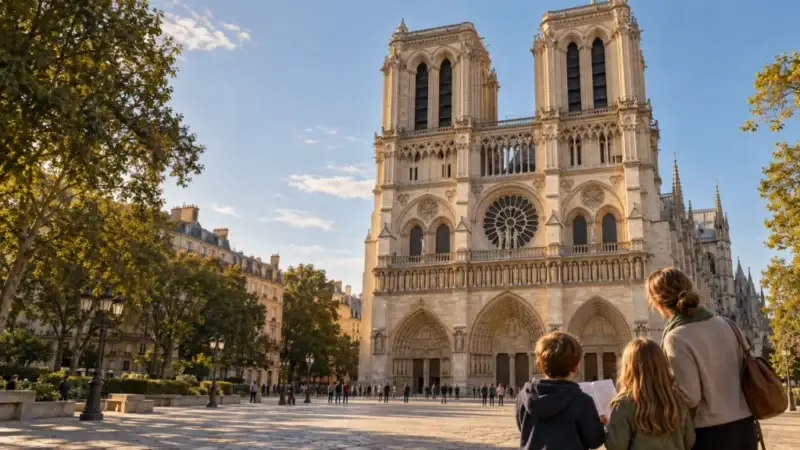
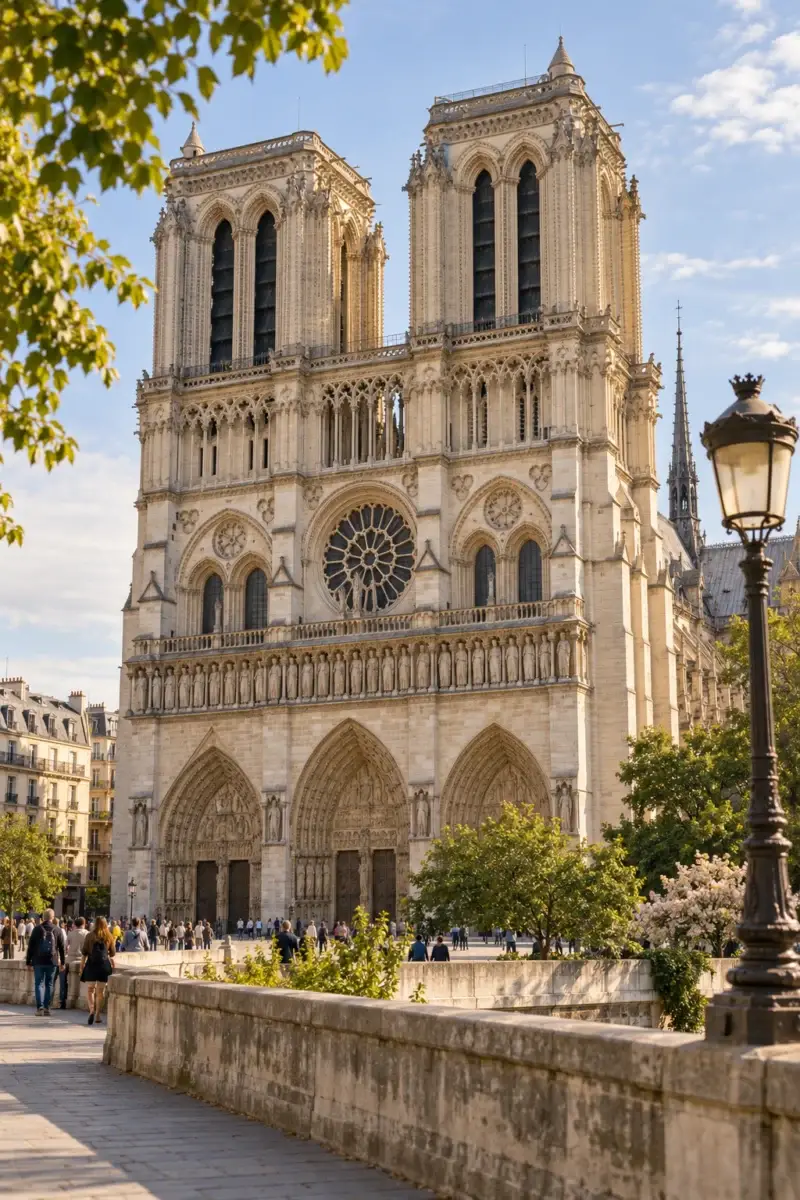
Notre-Dame from outside
Pause in the accessible public part of the square. Study the west front, portals and towers, connecting sculpture with architecture. Explore the cathedral’s city role, changes after the Revolution, 19th-century restoration and rebuilding after the 2019 fire. Cathedral, tower and archaeological crypt admission are excluded. Individual visitor access does not automatically permit a guided group. For an independent visit, check official Notre-Dame rules. We promise neither queue-free entry nor bypassing square restrictions.
The Palais de la Cité and Sainte-Chapelle
At Boulevard du Palais, turn to royal power and the French kings’ Paris residence. Louis IX and royal relics explain why Sainte-Chapelle was built within the palace. The chapel is inside a secured complex. This outdoor walk enters neither its courtyards nor stained-glass interior; discussing them does not imply admission. A separate guided visit requires advance agreement, the correct reservation and monument rules, and cannot simply be added mid-tour.
The Conciergerie and the Revolution
Follow the public riverbank to exterior views of the Conciergerie. Its towers and long façade reveal the palace’s scale. Explore the shift from royal residence to courts and prison, placing Marie Antoinette within revolutionary Paris. Interior halls and memorial spaces are excluded. Checks and restrictions may affect the Palais de Justice surroundings; we use accessible public pavements rather than promise secured-area access. City closures may change nearby stops.
Place Dauphine and Pont Neuf
After cathedral and palace, residential façades and trees change the scale. Discuss Henri IV, the royal square’s design and its place in everyday island life. Pause for questions and personal photographs. Finish at Pont Neuf, discovering why Paris’s oldest surviving bridge is called “New Bridge”, and study construction and details visible from the pavement. Finish on a public pedestrian area; descending to the island-tip garden or lower riverbanks is neither necessary nor guaranteed.
Who is this for?
Choose this walk for medieval Paris, Notre-Dame, royal power and the Revolution, either after a city introduction or as a focused first visit. Paris in two hours shares some stops with shorter commentary and continues to the Louvre. Your first walk through Paris covers more central landmarks. Consider overlap when booking both. The Latin Quarter instead explores universities, the Panthéon and Roman traces on the Left Bank. We do not add that district, the Louvre or Tuileries here, leaving time for the island.
Tickets, timing and preparation
Allow around three hours. The standard outdoor programme needs no tickets. Notre-Dame, Sainte-Chapelle, Conciergerie, tower and crypt interiors are excluded. Discuss any separate interior programme before booking: time, arrangements and costs will differ. Separate visits follow their own reservation and security requirements; check Sainte-Chapelle group rules and Conciergerie information before buying. Their admission price is separate from our outdoor tour fee. Daylight helps with façades. Bring comfortable shoes, seasonal water and rain protection; the Seine can be windy. Designed for adults and children aged 8 and over. Discuss children’s needs, pushchairs and walking limitations beforehand. Language and the precise meeting point are confirmed when booking.




 Артём
 Anastasia
 Aleksandra