Old Paris beyond the façades
Look at gateways, courtyard scale, alterations and buildings from different periods. The French hôtel particulier means a private town mansion, not a hotel; its layout reveals its owners’ position. Through examples rather than technical lists, discover why residences needed courts and gardens, how uses changed and how the old district remains alive. Questions and photographs are welcome with consideration for residents.
Hôtel de Sens and Village Saint-Paul
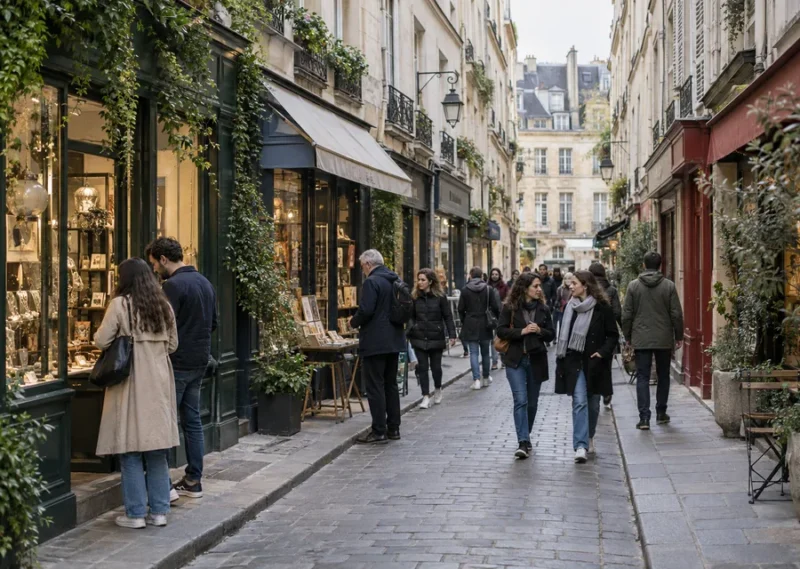
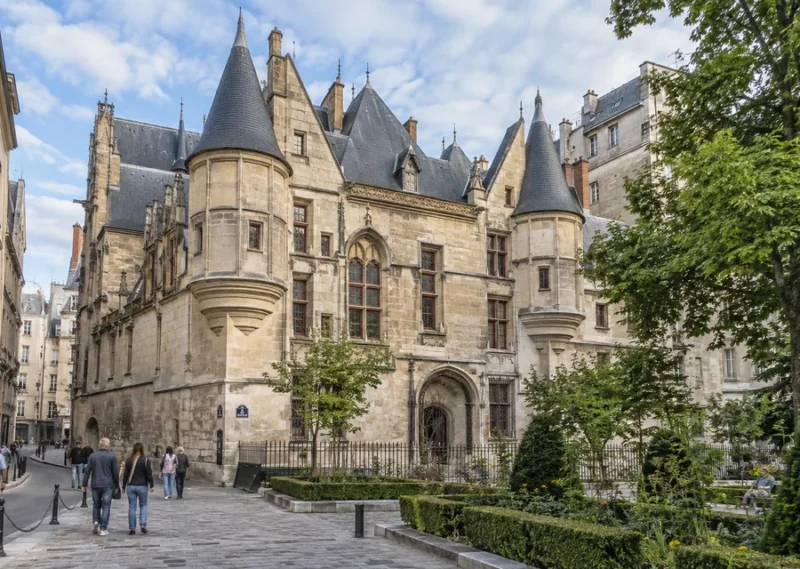
Meet at Place de l’Hôtel de Ville, beside Paris City Hall; we confirm the exact landmark after your enquiry. Continue to Hôtel de Sens on Rue du Figuier, whose silhouette introduces Paris before the grand 17th-century ensembles. View it from outside: the Forney Library and its courtyard are excluded. Village Saint-Paul offers a smaller scale of passages, cobbles, workshops and antique windows. Enter courtyards open to visitors, observing site rules. Locked gates remain closed; neighbouring streets provide alternatives.
Rue des Rosiers and neighbourhood memory
Explore Jewish heritage, everyday life and remembrance through signs, small businesses and the street’s activity. The story respects residents and religious life. This is a historical, rather than food, tour: tastings, purchases and religious institutions are excluded. Any extra stop needs advance discussion and depends on time, opening and pace.
Carnavalet and the town mansions
At Carnavalet’s façade on Rue Madame de Sévigné, connect Paris’s historical memory with the museum’s mansion architecture. Gallery visits require separate time and group-access checks. Continue towards Rue Saint-Antoine and Hôtel de Sully, comparing street façades with spaces behind gateways to understand a town mansion’s layout. Access on the day determines individual passages.
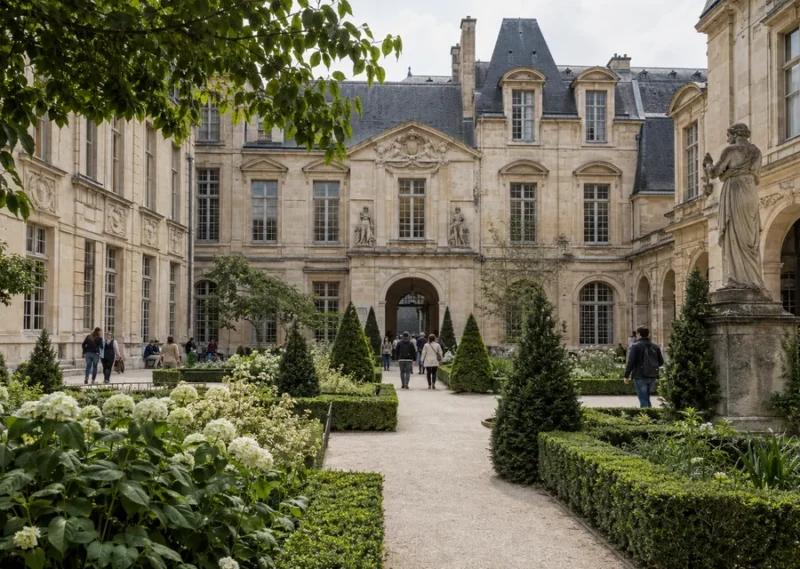
Hôtel de Sully: courtyard, garden and passage
The source check dated 17 October 2026 recorded free courtyard and garden access from 09:00 to 19:00, with closures on 1 January, 1 May, 1 and 11 November, and 25 December. Interiors are outside ordinary free access and this programme. When open, the courtyard and garden lead to Place des Vosges. We check official Sully access conditions and temporary restrictions before the walk. If closed, use public streets such as Rue de Birague; the mansion’s story remains included without promising entry. Village Saint-Paul publishes indicative hours of 09:00–19:00 subject to traders’ opening, rather than a guaranteed schedule for every gate and court. Works and passage access are checked. The Hôtel de Sens courtyard and library are not promised.
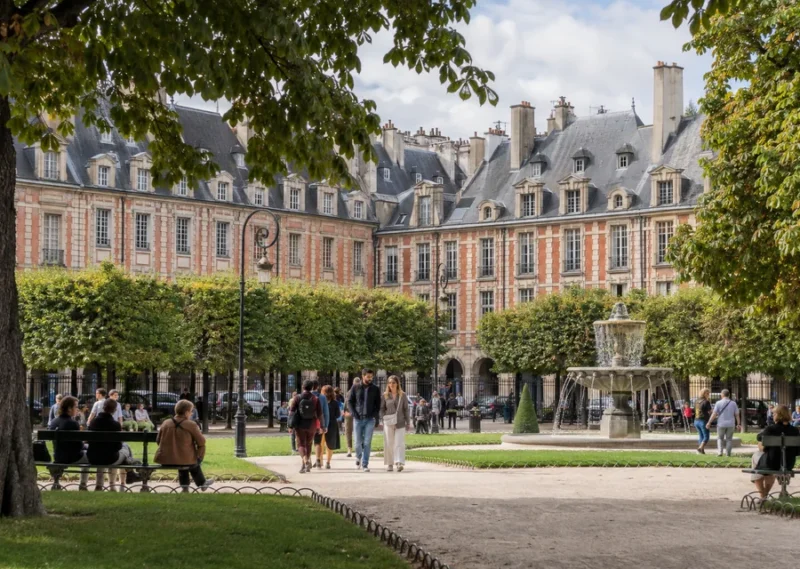
Finish at Place des Vosges
Compare its arcades and brick-and-stone façades with the narrow streets and individual mansions seen earlier. Finish in the square’s architectural setting, without needing access to the central garden. Your guide suggests ways to continue. Victor Hugo’s house, other museums and private interiors are excluded.
A different neighbourhood walk
Saint-Germain focuses on literary cafés, books and Left Bank intellectual life. The Latin Quarter explores university history, the Sorbonne, Panthéon and ancient Paris. Here, town mansions, courtyards and Right Bank residents are central. Allow around 2.5 hours. The outdoor route needs no museum tickets. Wear comfortable shoes for cobbles, thresholds and busy crossings. Discuss children’s ages, pushchairs, breaks and language when booking. We agree necessary adaptations without promising step-free access to every courtyard.



 Александра
 Airat
 Irina