
Some French names sound short and gentle; others recall royal palaces, artists and characters in novels. In Paris, they appear on street signs, museum labels, monuments and shopfronts. Behind them are people whose stories help explain the city.
Where do French names come from?
Many names now regarded as French have older roots in Latin, Greek, Hebrew and Germanic languages, reshaped over time by French speech.
Jean, Pierre, Nicolas and Étienne have relatives in English: John, Peter, Nicholas and Stephen. In everyday introductions, however, use the name a person gives you: Pierre remains Pierre.
Names also reflect France’s diversity. Family traditions, regional culture, literature and international connections all influence parents’ choices.
French names for men
Begin with names that appear often in French history and culture.
Jean: the French form of John.
Pierre: related to Peter, with roots meaning “stone” or “rock”.
Louis: a familiar name from the history of French kings.
Henri: a name shared by kings, writers and artists.
Charles: used by French monarchs as well as in modern life.
Jacques: the French form related to Jacob and James.
François: related to Francis and the idea of a person from France.
Étienne: the French form of Stephen.
Nicolas: related to Nicholas.
Antoine: the French form of Anthony.
Gabriel: an international name of biblical origin.
Philippe: a name of Greek origin, related to Philip.
These examples help you recognise written and spoken names. Historical familiarity is different from popularity among babies born today.
French names for women
Literature, art and everyday culture have made many French women’s names familiar to English speakers. Some spellings look familiar while their French pronunciation differs.
Marie: the French form related to Mary and Maria.
Anne: a French form of Anna.
Jeanne: the feminine form of Jean.
Louise: the feminine form of Louis.
Charlotte: the feminine form related to Charles.
Claire: from a Latin root meaning “clear” or “bright”.
Sophie: from the Greek word for wisdom.
Marguerite: associated with “pearl”; also the French word for a daisy.
Madeleine: the French form of Magdalene.
Émilie: related to Emilia and Emily.
Juliette: familiar through literature and theatre.
Gabrielle: the feminine form of Gabriel.
English sound approximations only go so far. French nasal vowels, the French r and some letter combinations have no exact English equivalent.
Choosing a French name
The appeal of a name is personal. You may prefer short forms such as Anne, Claire or Louis, or longer names such as Madeleine, Juliette or Antoine. For a child, fictional character or creative project, consider context as well as sound.
Pronunciation. Listen to the French name aloud; its spelling may suggest a different sound to an English reader.
The full name. Try the given name with the surname to hear how they fit together.
Other languages. The same spelling may be familiar in several countries but pronounced differently.
Associations. A name can recall a writer, historical figure or fictional character.
For a contemporary person, choose with awareness of these associations. For a historical character, consider the period and setting too.
Royal names in French and English
Royal names appear throughout Paris, museum collections and the story of Versailles. English and French historical writing sometimes use different forms.
Louis remains Louis in English accounts of Louis XIV, Louis XV and Louis XVI. In French, the final s in Louis is normally silent.
Other royal names can have familiar English forms:
Henri IV is often called Henry IV in English.
Charles keeps the same written form in English and French, though the pronunciation differs.
François Ier may appear as Francis I in English historical writing.
These are historical naming conventions. In an everyday introduction, use the form the person gives you rather than substituting an English equivalent.
French names used by men and women
Camille, Claude and Dominique are examples of French names used by people of different genders.
Camille appears in both the composer Camille Saint-Saëns and the sculptor Camille Claudel. The same written given name belongs to two very different artistic stories.
Other masculine and feminine forms differ in writing but can sound alike, such as Gabriel and Gabrielle or Emmanuel and Emmanuelle. Read a name in context and follow the person’s own introduction.
What do hyphenated names mean?
Jean-Pierre, Jean-Luc, Anne-Sophie and Marie-Claire are compound given names. Jean-Pierre is one name with two parts; normally use both unless the person offers a shorter form.
Several names without a hyphen may be separate given names. A person can have several in official documents while using just one in daily life.
When meeting a guide, hotel employee or apartment host, repeat the form they use when introducing themselves.
How do you pronounce French names?
A few examples make names easier to recognise during your trip. These English hints are approximate.
Jean begins with the sound in the middle of “measure” and ends in a nasal vowel, without a separately sounded n.
Jeanne has a clearly sounded n, unlike Jean. The two names differ in spelling and sound.
Louis sounds roughly like “loo-ee”; the final s is normally silent.
François sounds roughly like “frahn-swah”, with a nasal first vowel. The ç sounds like s and oi like “wah”.
Charlotte begins with a “sh” sound, and its final t is pronounced in French.
Étienne sounds approximately like “ay-tyen”; the accent on É helps indicate the vowel sound.
Do not worry about a perfect accent. Politely asking someone to repeat a name is natural and helps avoid misunderstandings.
French names on the Paris map
Names become especially interesting when you connect them with places.
Nicolas Flamel and old Paris. His house on Rue de Montmorency leads to stories of medieval life, charity and the philosopher’s stone legend. Read more about the building and its restaurant in our oldest-house article below.
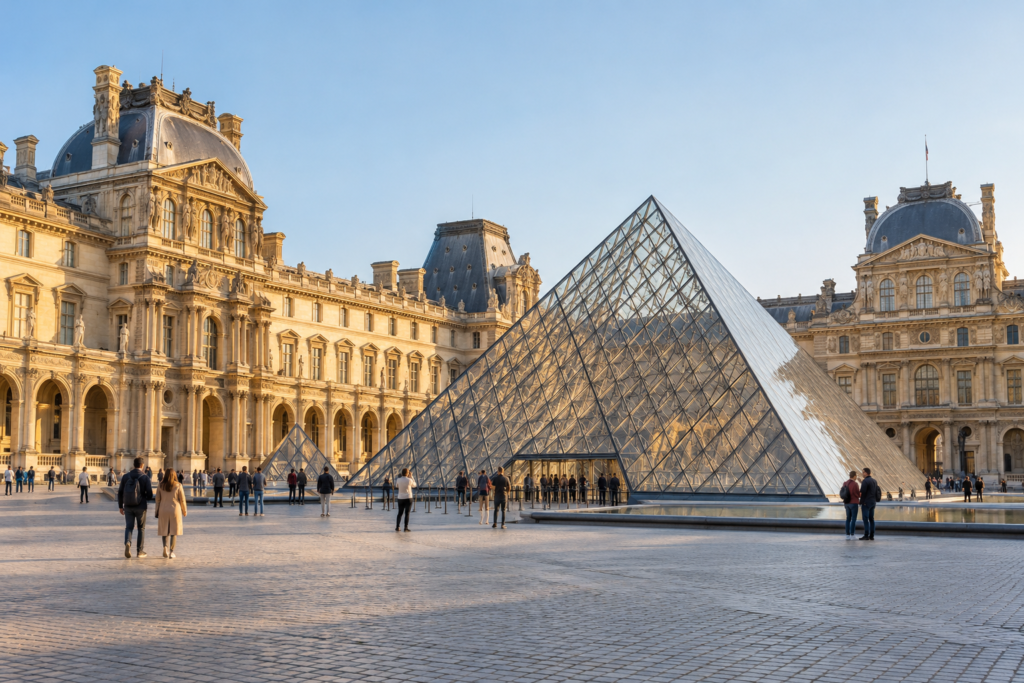
Louis and royal history. The name connects French monarchs, palaces and art collections. In the Louvre or Versailles, listen for the French “loo-ee” behind the familiar written names of the kings.
Pierre and Marie Curie recall scientific Paris. Explore the university neighbourhood around the Sorbonne and Panthéon on a Latin Quarter walk. Discuss visits specifically connected with the Curie family separately.
Camille and the arts. One name can lead from music to sculpture, turning a museum label into the beginning of a human story.
On a guided walk, names connect with the people who lived in a neighbourhood, why they are remembered and the places before you.

Frequently asked questions about French names
Should I translate a French person’s name into English? In everyday conversation, no. If someone introduces themselves as Pierre, use Pierre rather than Peter. Historical figures may have established English forms.
What is the difference between Jean and Jeanne? Jean is a masculine name and Jeanne a feminine name. They differ in French spelling and pronunciation.
Is Marie a name on its own? Yes. It can also form part of a compound name such as Marie-Claire.
Do all French names originate in French? No. Many came from other languages and developed French forms. Names from many cultures are used in France today.
Discover Paris through the people who shaped it
A name on a façade may belong to a benefactor, a museum label to an artist and a street sign to a whole chapter of Paris history.
Some names have legends attached, such as Nicolas Flamel. Continue with his house below, or use our articles on leisurely routes, coffee breaks and quiet courtyards to plan your own walk.