
Why give Le Marais a walk of its own?
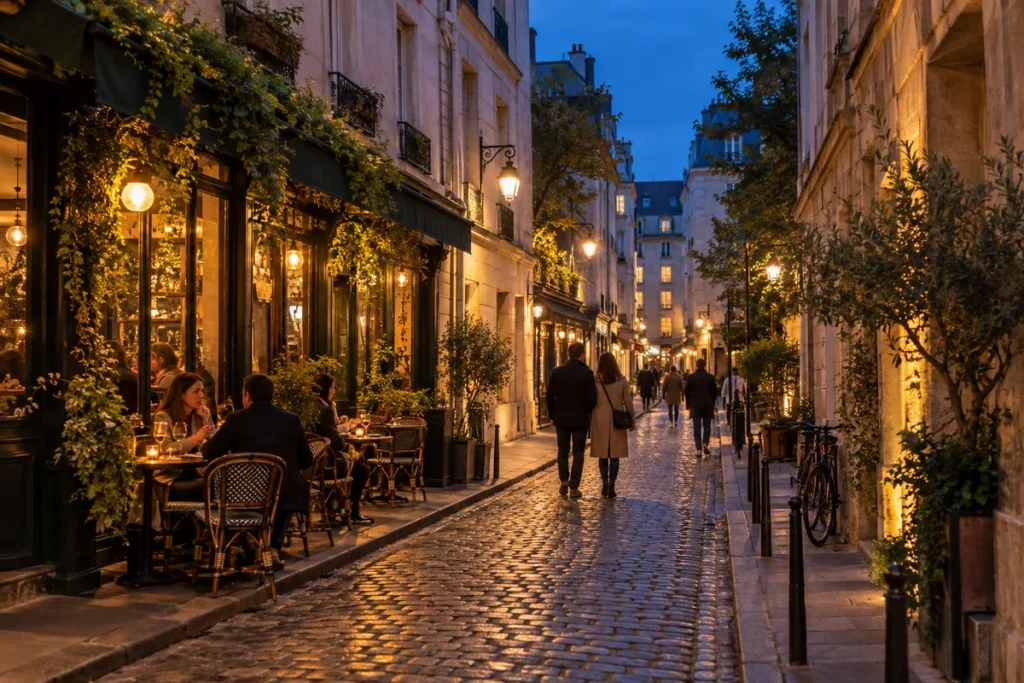
It is easy to cross Le Marais between Notre-Dame and Place des Vosges, the Centre Pompidou and Bastille, a museum and dinner. Yet its appeal lies in the changing layers along the way: a narrow street, quiet courtyard, mansion archway, gallery window, the smell of falafel and an old wall sign. More of the old street pattern survives here than in many central neighbourhoods. Haussmann’s broad avenues reshaped it less completely than the area around Opéra. The result feels intimate and lively, with streets that take unexpected turns. On a first visit, explore Le Marais after getting your bearings around the Louvre and Seine. The contrast in scale makes the neighbourhood especially rewarding.
Medieval Paris and Marais mansions
Marais means “marsh”. Once a wet area on the city’s edge, it was drained and developed into a prestigious neighbourhood. The 16th and 17th centuries left a strong mark through hôtels particuliers: grand private townhouses. Their beauty often lies behind formal street façades: cobbled courtyards, staircases, gardens and balanced windows. Look to the sides as you walk, while respecting private entrances and access signs. Le Marais also holds an important place in Paris’s Jewish history. Around Rue des Rosiers, bakeries, shops, falafel queues and different languages reflect a living neighbourhood where memory and everyday life meet.

A 2–3-hour Marais walking route
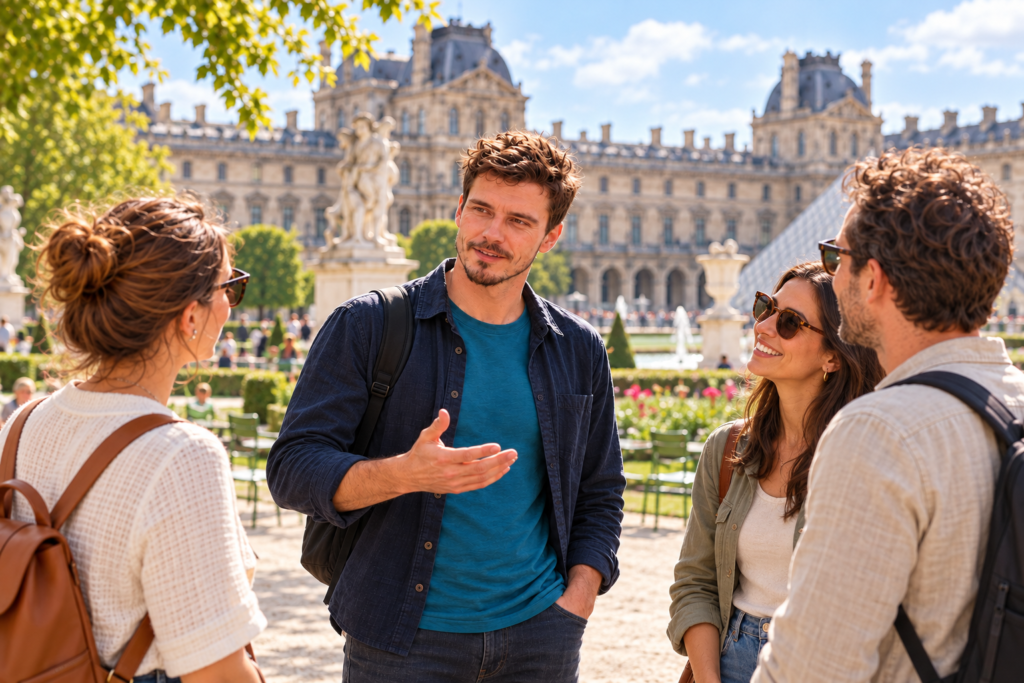
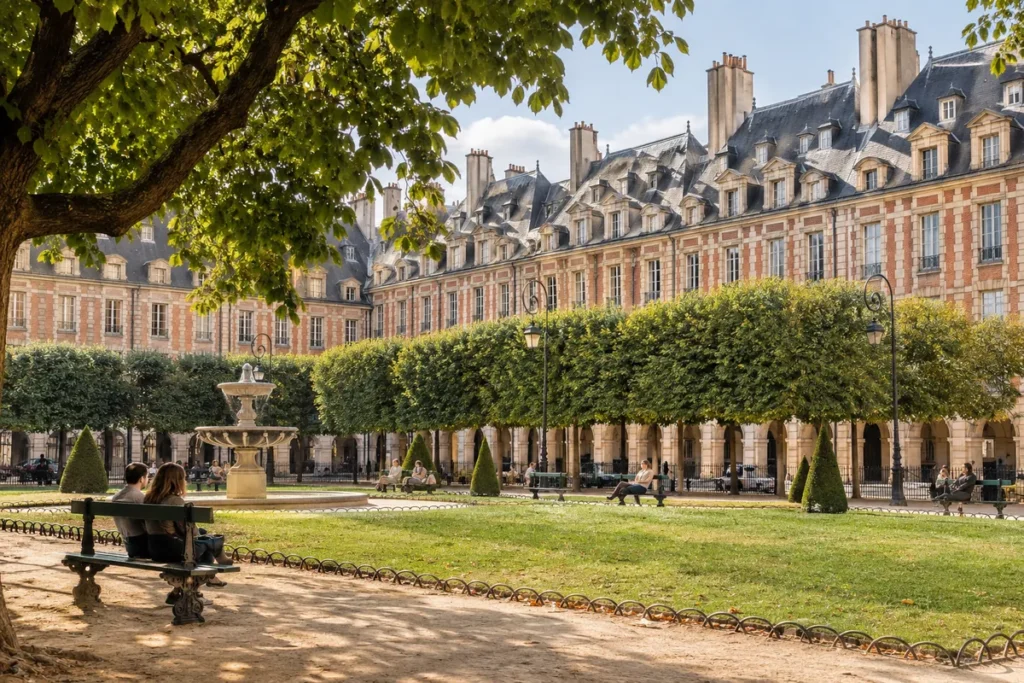
Begin at Hôtel de Ville or Saint-Paul station. Approaching from the river gives a gradual introduction: streets narrow, shops become smaller and the pace changes. One balanced route is Hôtel de Ville, Saint-Gervais church, Rue François Miron, Village Saint-Paul, Rue des Rosiers, Hôtel de Sully and Place des Vosges. It links medieval streets, courtyards, Jewish heritage and grand townhouses. Look for the old half-timbered houses on Rue François Miron, then explore Village Saint-Paul’s courtyards and antique-shop windows. Follow public access arrangements as you go. Rue des Rosiers deserves time for its cultural history as well as its food. It can be busy, especially at weekends. For the area’s character and location, see our Le Marais neighbourhood guide. To connect its houses and courtyards through their stories, choose a guided Marais walk.
What to see in Le Marais
If you have more time, add Musée Carnavalet, the museum of Paris history. After seeing the neighbourhood streets, its collections help put the city into context. The nearby Centre Pompidou’s main Beaubourg building is closed for renovation. Choose another open venue for the museum part of your day. Hôtel de Sully offers another rewarding stop. Where access is open, the courtyard passage towards Place des Vosges reveals the sequence of street, gateway, courtyard and garden. Choose one museum, a square, a café break and a few streets to explore attentively. The many details can be as tiring as the distances. Check the Musée Carnavalet website for opening times and admission arrangements.
Cafés, shops and neighbourhood life
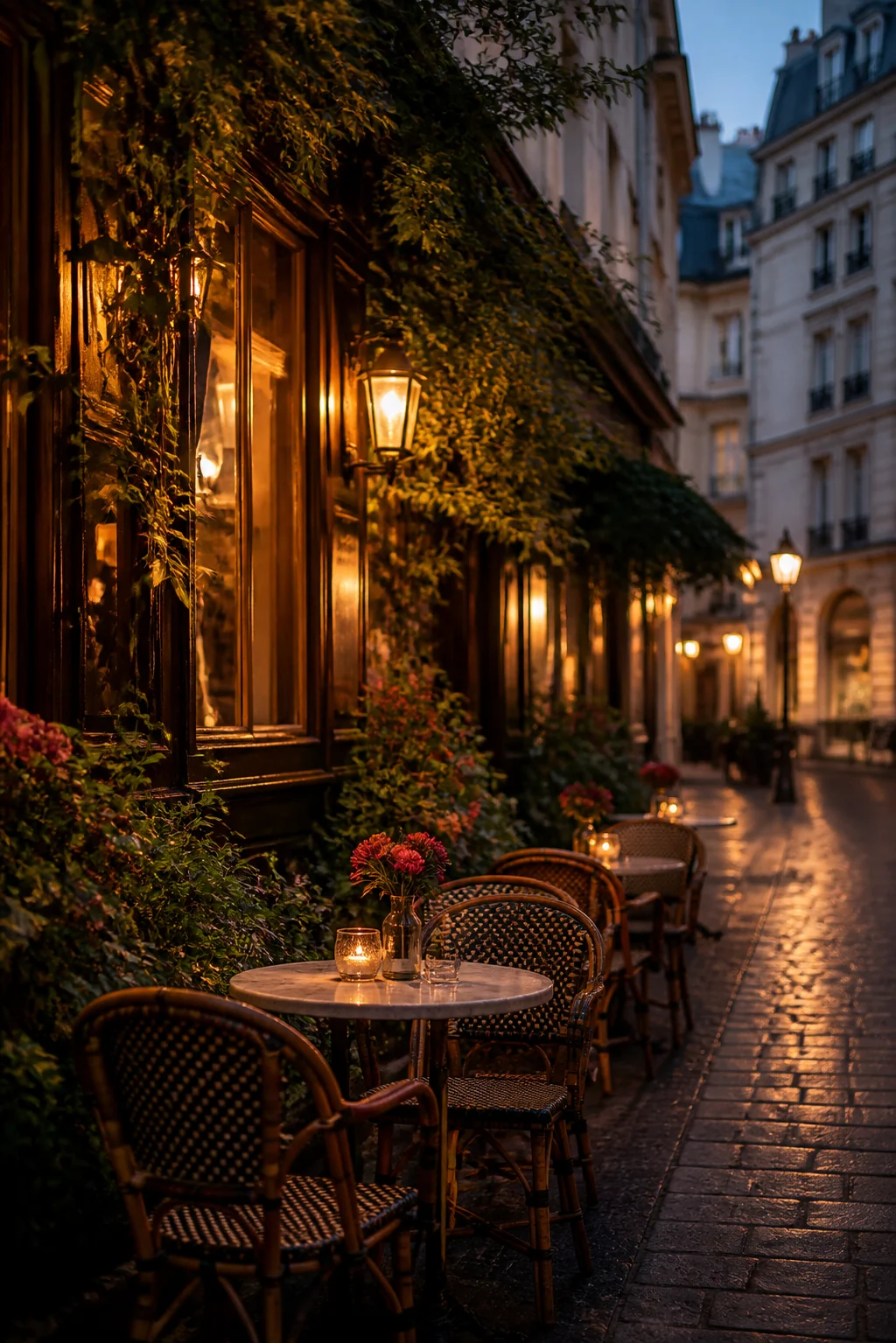
Today’s Le Marais is also a neighbourhood of independent shops, galleries, small cafés, pâtisseries, bookshops and design spaces. Parisians come to meet for coffee, buy gifts, see exhibitions and sit on terraces. Weekends and late afternoons can be busy. For quieter streets, try a weekday morning. For the neighbourhood’s energy, come later when shop windows light up and terraces fill.

Practical tips
Allow at least two hours, or three to four with a museum and a comfortable break. Wear suitable shoes for cobbles, narrow pavements and frequent short stops. Try a weekday morning or late afternoon. Sundays bring lively shops and more people; check individual museum and shop opening times, especially for Mondays. Our articles on walking pace and coffee breaks help plan a relaxed visit. The courtyards selection suggests extra stops, while the French names guide adds context to names you see around the city.
Common mistakes to avoid
Leave time beyond Place des Vosges: the square is one part of a varied neighbourhood. A hurried forty-minute gap between museums rarely gives Le Marais room to unfold. Enjoy contemporary life alongside medieval streets and aristocratic mansions. The relationship between old walls, shops and neighbourhood routines is part of its appeal. Follow a side street when you have time. A quiet courtyard, unexpected façade, gallery window or evening light on stone may become your favourite discovery.