How to use this 3-day Paris itinerary
Plan 3 days in Paris at an easy pace
Avoid trying to fit the whole city into three days. Notre-Dame, the Louvre, Eiffel Tower, Montmartre, Le Marais and Latin Quarter may look close on a map, but connected neighbourhood walks make the day more enjoyable than rushing between distant sights.
Give each day a theme. Begin with the historic heart: Île de la Cité, the Seine, old bridges and Latin Quarter. Spend the second day around the Louvre, Tuileries, grand squares and Left Bank. On the third, explore Montmartre in the morning, Le Marais later and take an easy evening walk.
Day 1: the historic centre, Île de la Cité and Seine
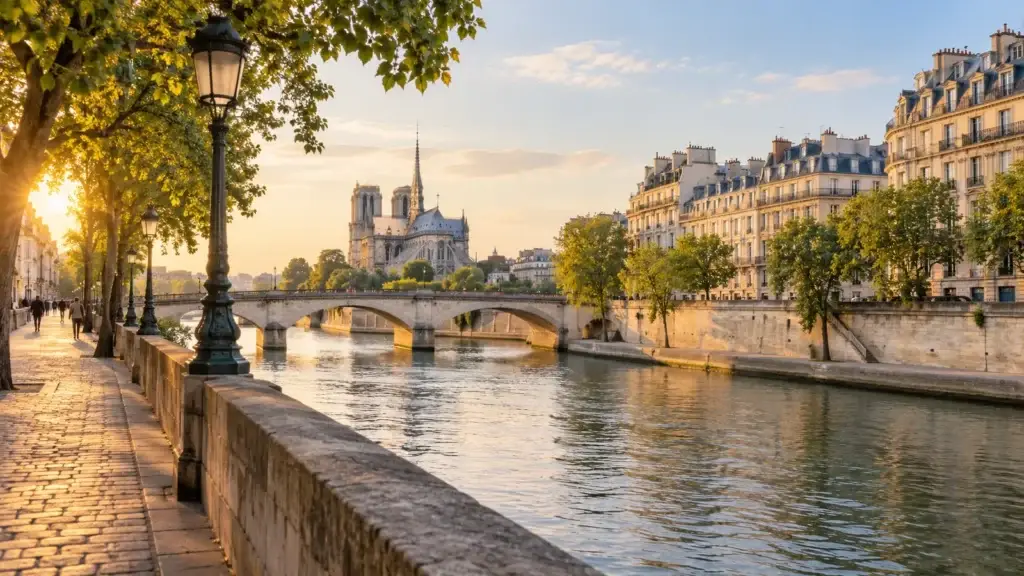
Begin on Île de la Cité to get your bearings. The Seine divides Paris into its Right and Left Banks, with bridges, historic façades, spires and quays all around. It is a rewarding starting point even if you view Notre-Dame only from outside.
Start in the square before Notre-Dame, then continue towards the flower market, Sainte-Chapelle and the Conciergerie. Cross to Île Saint-Louis for small streets, old houses and riverside views.
Devote the first day to old Paris. For an introduction with a guide, choose our historic centre walk, then leave time to explore independently. Continue beside the Seine towards the Latin Quarter, with bookshops, old university streets and small squares. Choose stops that suit your interests and energy.
Day 2: the Louvre, Tuileries and Left Bank
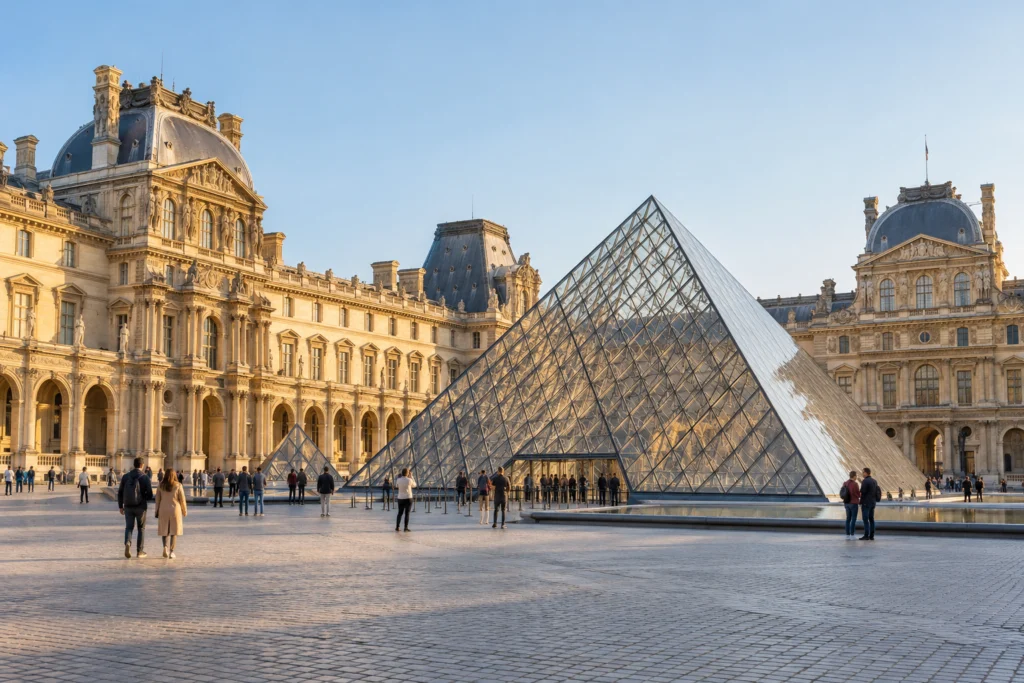
Explore the Louvre, Tuileries Garden, squares, palaces and views. If entering the museum, book in advance and consider a morning slot. Plan a focused 2–3 hours for a first visit. Check the Louvre’s opening times and admission arrangements before visiting.
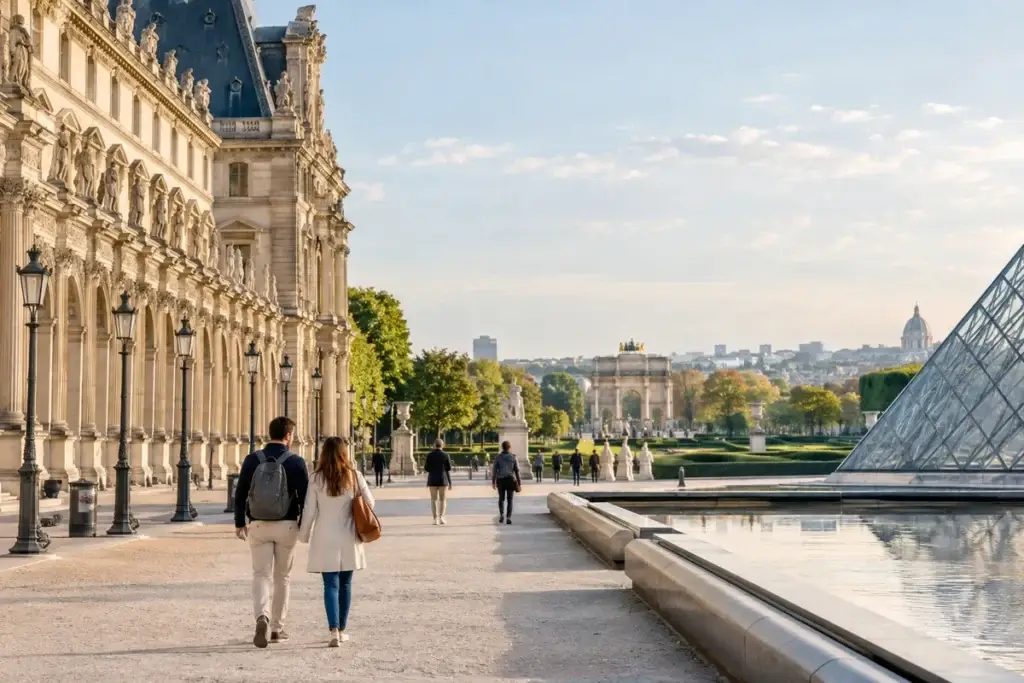
After the Louvre, take a break in the Tuileries. Formal vistas, tree-lined paths and chairs beside the fountains ease the transition from museum galleries to the city, with views towards Place de la Concorde.
If you have energy after the museum, spend time on the Left Bank. Plan a Saint-Germain tour as a separate part of the day, allowing a rest between programmes.
Day 3: Montmartre, Le Marais and evening Paris
Begin early in Montmartre, before the busiest visitor hours. Enjoy the view from Sacré-Cœur, then leave the main streets for quieter lanes.
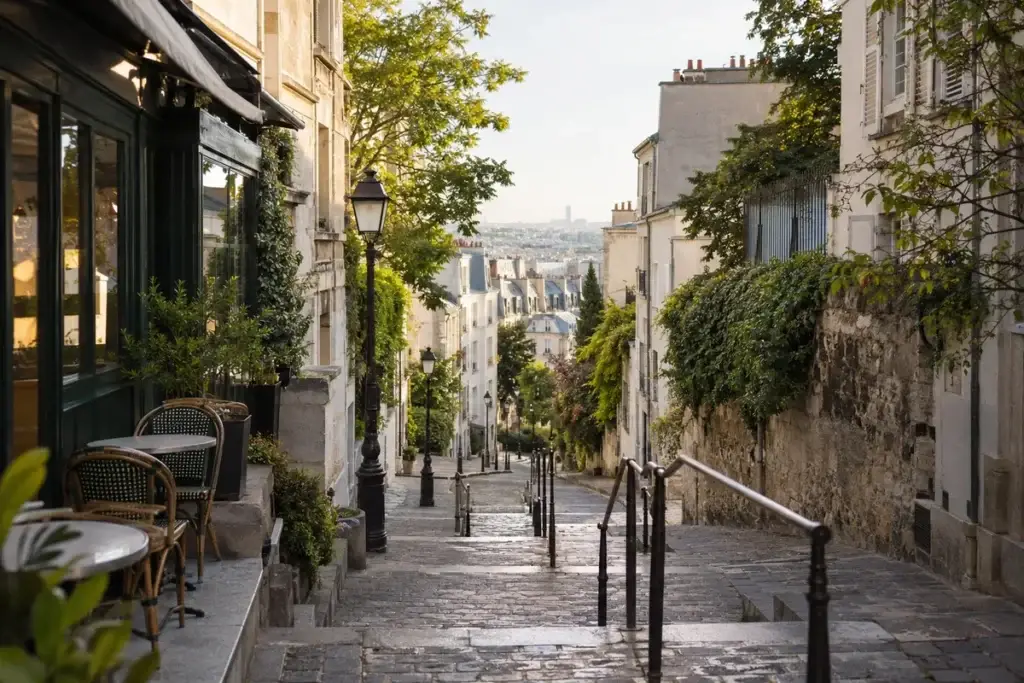
Explore beyond the artists’ square to stairways, small houses, the vineyard, old cabarets and unexpected views between façades. One independent route leads from Sacré-Cœur to Place du Tertre, then towards Rue Lepic, Dalida’s house and Place des Abbesses before descending into everyday neighbourhood life.
Take a proper break before travelling to Le Marais. Begin at Place des Vosges, then explore small streets towards historic mansions, the Jewish quarter, boutiques, galleries and courtyards. Keep this final walk flexible.
Where to stay, eat and take a break
For a short stay, consider travel time when choosing accommodation. Savings far from the centre may mean longer journeys. Le Marais, the Latin Quarter, Saint-Germain and areas near the Louvre or Opéra are convenient bases for a first visit.
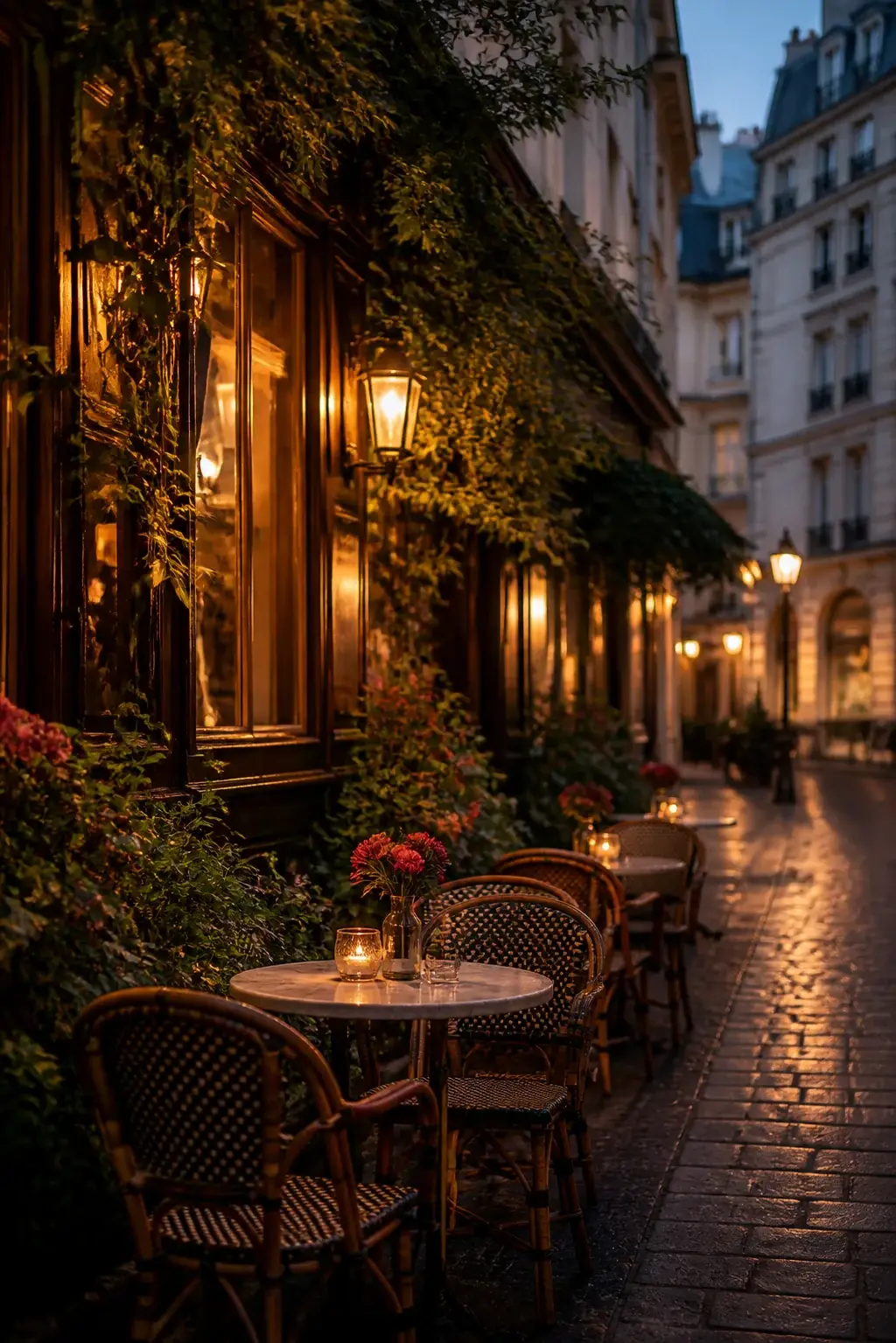
Give meals a simple rhythm: coffee and a pastry in the morning, a proper lunch, a light afternoon snack and a relaxed dinner. Leave room for good food without making every meal a complicated plan.
Before you travel
Plan at most one major museum each day. Check official opening times and admission information, and book popular sights in advance. Wear comfortable shoes: even with the Métro, a Paris day can easily reach 15,000–20,000 steps.
Keep evenings flexible and adapt to the weather. Move museums and covered galleries to rainy periods and save sunshine for the Seine, parks and viewpoints. Keep one or two possible cafés near each day’s route.
Common 3-day itinerary mistakes
Trying to combine the Louvre, Eiffel Tower, Montmartre, Le Marais, Notre-Dame, Versailles and several museums in one short stay can leave more memories of travel and tiredness than of Paris.
Small walks add up. Five “only twenty minutes away” journeys become a long time on your feet. Group nearby sights into a connected route.
A good three-day plan balances famous landmarks, living neighbourhoods and time to pause. One or two guided walks can connect the city’s stories, whether in the historic centre, Louvre, Montmartre or evening Paris.