Nicolas Flamel’s house does not tower above the neighbourhood or compete with famous palaces. Its distinguishing features are pale stone, old lettering and the story of a man whose name became linked to the philosopher’s stone.
It is often called the oldest house in Paris. But is it the city’s oldest building? The distinction offers a useful introduction to ancient, medieval and modern Paris.
What is the oldest building in Paris?
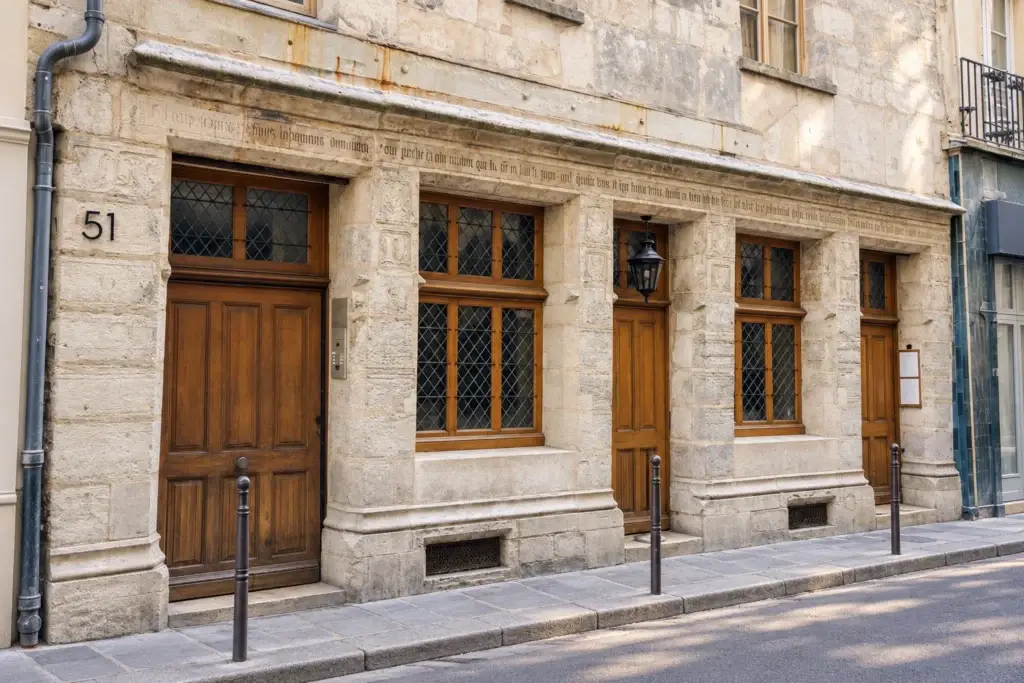
If you mean a surviving house built for people to live in, the key address is 51 Rue de Montmorency in Paris’s 3rd arrondissement. Nicolas Flamel’s house dates to 1407. France’s national architectural heritage database cautiously describes it as probably the oldest house in Paris.
Calling it the city’s oldest building without qualification would be misleading. Older religious structures and parts of ancient buildings survive in Paris. Flamel’s house is a rare witness to the residential life of medieval Paris: a city of work, trade, charity and messages carved into walls.
Where is Nicolas Flamel’s house?
The address is 51 Rue de Montmorency, 75003 Paris. Arts et Métiers Métro is a convenient landmark. You can view the façade from the street. Auberge Nicolas Flamel restaurant occupies the building; this is not a house museum with free access to every room.
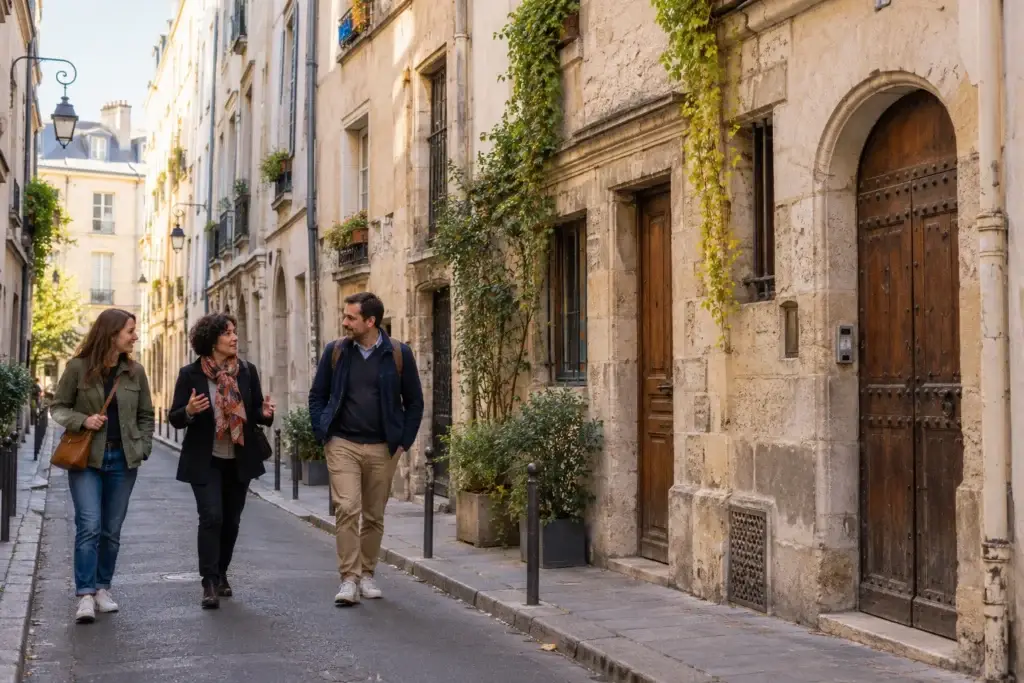
Put the map away for a moment and look closely: the width of the street, neighbouring façades, doorways and the way old buildings remain in use beside modern businesses. Include the house in a walk around northern Le Marais and Arts et Métiers.
Who was Nicolas Flamel?
Many people know Flamel’s name from stories about alchemy and the philosopher’s stone. Behind the legend was a real Parisian connected with writing, books, charity and the city life of his time.
Later tales added secret knowledge and the transformation of metals into gold. The Musée de Cluny explains how rumours and texts attributed to Flamel gradually turned a historical figure into a legendary alchemist. The house on Rue de Montmorency is a real medieval monument to which a far more fantastic story became attached.
Why was the house built?
The name “Nicolas Flamel’s house” can suggest his own home, but the building’s history is above all charitable. According to the City of Paris, it sheltered people in need. Residents were expected to pray, as the façade inscription recalls. Helping others was closely bound to the religious beliefs of medieval society.
That story changes the way you see the building. These old walls also bear witness to how Parisians understood care for others and remembrance.
What should you look for on the façade?
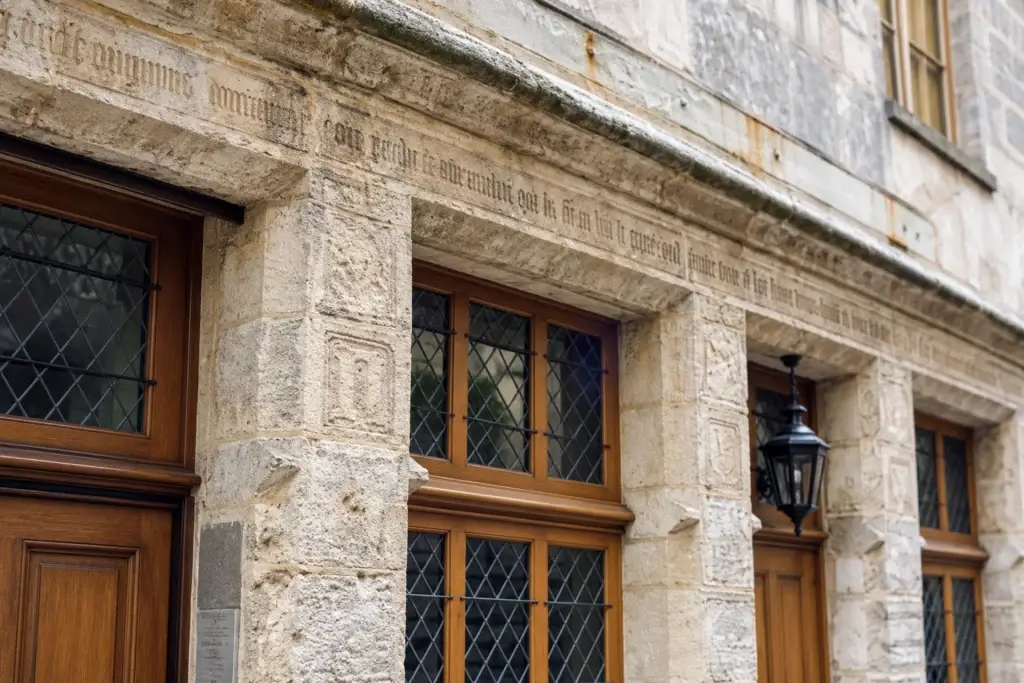
Take in the whole building, then move closer without blocking pedestrians or restaurant guests. The stone inscription above the ground floor is the detail worth pausing for. Even without reading Old French, you can appreciate the letter shapes and the different role written messages once played in the street.
Notice the stone surrounds of the openings and the carved details. They draw your eye to individual traces of the past. The house remains in use: see it as a historic building with a long life, rather than an unchanged 15th-century setting.
You do not have to decipher every sign. One well-told story can make a small façade more memorable than a monumental building.
Auberge Nicolas Flamel: dining in Paris’s oldest house
Auberge Nicolas Flamel serves contemporary French cuisine at this address and is listed in the MICHELIN Guide. It offers a way to combine a glimpse of old Paris with a dining experience.
Historic stonework and beams meet a restrained modern interior, as the MICHELIN description notes. The restaurant’s website recounts its connection with Alan Geaam, who became its owner in 2007, and a French culinary approach inspired by the building’s history.
Auberge Nicolas Flamel occupies the building today. To combine a look at the façade with lunch or dinner, check current menus and booking arrangements on the restaurant’s official website.
Viewing the façade and visiting the restaurant are separate experiences. You can see the house from the street during a walk; access to the dining rooms depends on the restaurant’s arrangements. Mention any restaurant plans when discussing a guided route so the timing can be coordinated.
Which Paris buildings are older than Flamel’s house?
The answer depends on the building’s purpose and the age of the surviving fabric. Saint-Germain-des-Prés church preserves much earlier architectural elements. Its tower and Romanesque nave relate to the turn of the first and second millennia; the choir dates to the 12th century. The date the abbey was founded is not the age of every wall in today’s church.
The Roman baths at Cluny take you further back into antiquity, preserved within the later city. These places tell different stories: Flamel’s house of medieval housing, Saint-Germain-des-Prés of religious architecture and the baths of ancient Paris.
How can you include the house in a Paris walk?
Treat Rue de Montmorency as one stop on a wider walk through old Paris. A useful outline is Arts et Métiers, Rue de Montmorency, Flamel’s house and then Le Marais. The time needed depends on your stops, route and museum visits.
Visit Flamel’s house before exploring Le Marais. To continue with a guide, see our Marais walking tour. Its standard itinerary covers other sights, so discuss including Flamel’s house in advance.
Paris’s oldest house: frequently asked questions
What is the oldest house in Paris called? The name usually refers to Nicolas Flamel’s house on Rue de Montmorency, dated 1407. Specify that it is a house, rather than the oldest of all surviving structures in the city.
What is the address? 51 Rue de Montmorency, 75003 Paris. Arts et Métiers Métro is a convenient starting point.
Can you go inside? View the façade from the street. Auberge Nicolas Flamel restaurant occupies the building, and access to its rooms follows the restaurant’s arrangements. This is not a conventional house-museum visit.
Is it really linked to an alchemist? It is connected with the historical Nicolas Flamel. The philosopher’s stone belongs to a later legend, which should be distinguished from documented history.