Why Notre-Dame matters to Paris
Notre-Dame stands on Île de la Cité, at the heart of the city’s early history. Its setting connects an ancient island, medieval streets, Seine bridges, royal power, revolutions, literature, destruction and restoration.
Familiar photographs and busy queues can make the cathedral feel like an obligatory stop. Look more slowly and its walls reveal centuries of building, damage, debate and renewal.
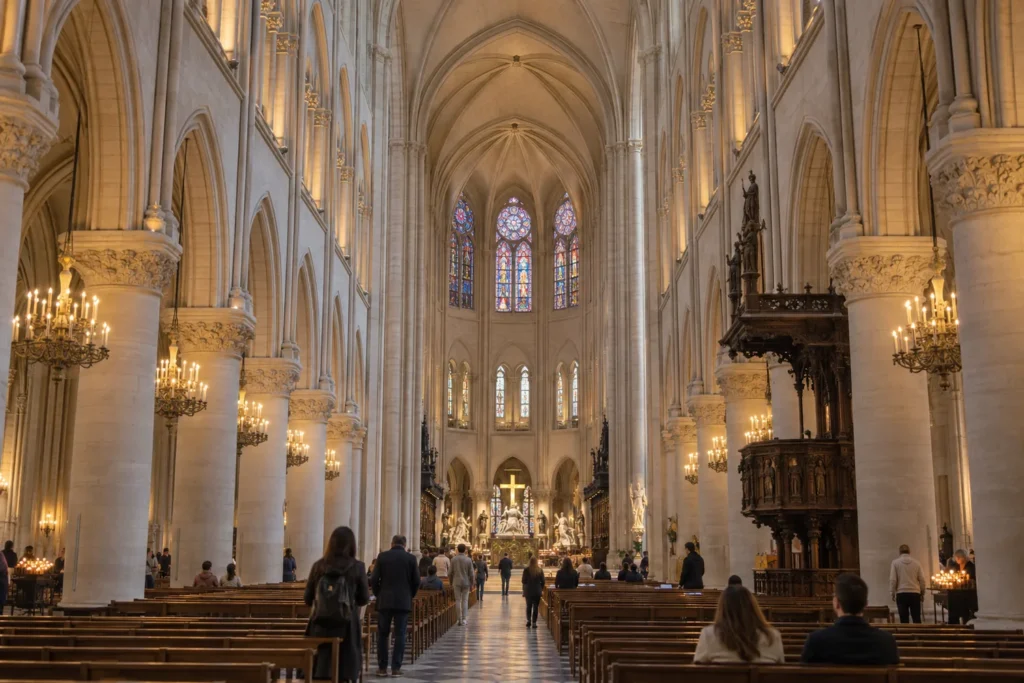
Notre-Dame remains an active Catholic cathedral. Inside, speak quietly, look attentively and leave time to pause as well as admire the architecture.
How the cathedral began
Construction began in the 12th century and continued over generations. Notre-Dame grew through additions, alterations, decoration and structural work, giving it the character of a building shaped over time.
Gothic architecture here is about light and height. Builders lifted stone upwards, opened the walls and drew the eye towards the vaults. The exterior shows the structure’s strength; the interior reveals its spatial ambition.
The cathedral’s history includes royal and religious life, revolutionary damage, Viollet-le-Duc’s 19th-century restoration, the fame of Victor Hugo’s novel and the fire of 15 April 2019. Each chapter added to its meaning.
Façade, towers and details to notice
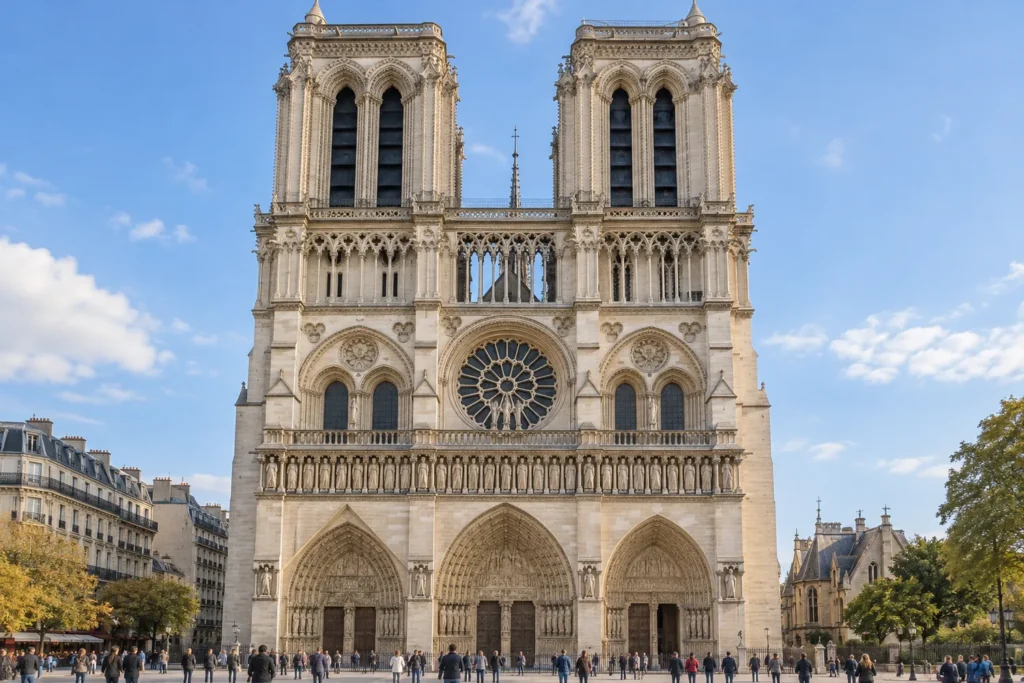
From the square, begin with the overall balance: two towers, three portals, a great rose window and horizontal galleries. Then look for carved figures, scenes above the doors and traces of time in the stone.
Choose a few details. The central portal depicts the Last Judgement; the side portals relate to the Virgin Mary and Saint Anne. Look up to the rose window, then find the Gallery of Kings, whose damage and restoration reveal the monument’s changing history.
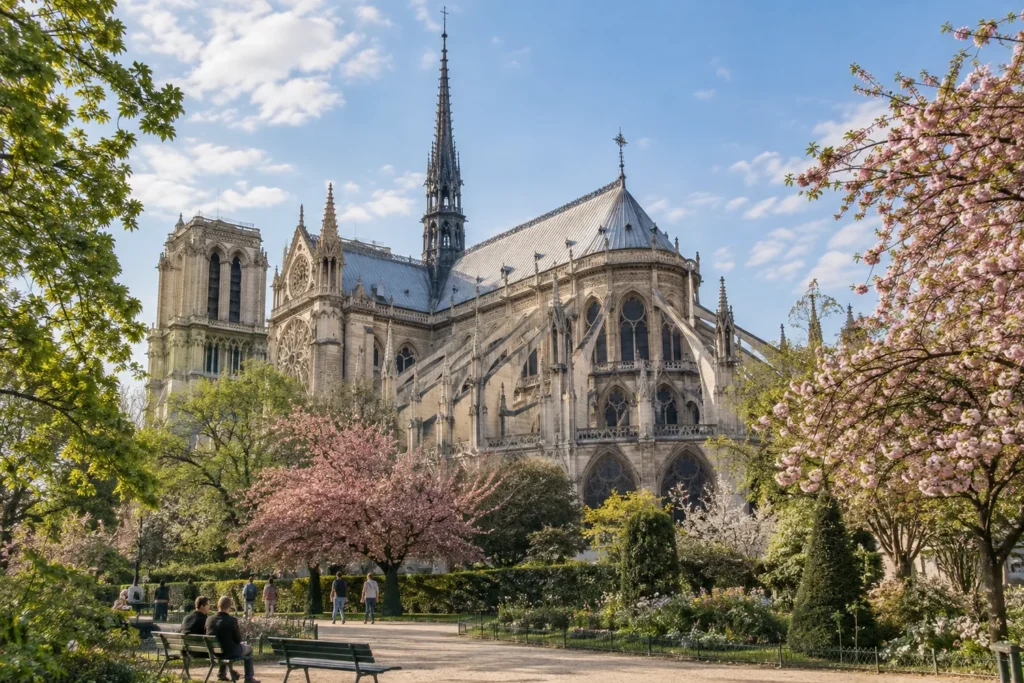
From the side, the buttresses, apse and long walls reveal how the cathedral supports its height. These views bring the engineering of Gothic architecture into focus.

The 2019 fire and restoration
On 15 April 2019, fire destroyed the spire, much of the roof and its timber framework, often called “the forest” for its many old oak beams. The loss reached far beyond the walls of one monument.
Stabilisation was followed by complex restoration involving stone, timber, metal, roofing, sculpture, stained glass, the organ and interior surfaces. Many workshops and specialists contributed their craft.
The restoration aimed to welcome worshippers and visitors again while preserving the cathedral’s historic appearance. Notre-Dame reopened to the public in December 2024, bringing its interior back into the experience of central Paris.
Visiting Notre-Dame after reopening
Begin with Notre-Dame’s practical visitor information. To choose a time in advance, use the free reservation service on the official website.
The reopened cathedral attracts many visitors. A weekday morning or a less popular time may be calmer. Weekends and holidays can be busy, and free admission may still involve waiting.
The cathedral, towers, crypt and temporary exhibitions can have separate access rules, timetables and tickets. Check each visit shortly beforehand rather than relying on arrangements from an earlier trip.
A walk around the cathedral
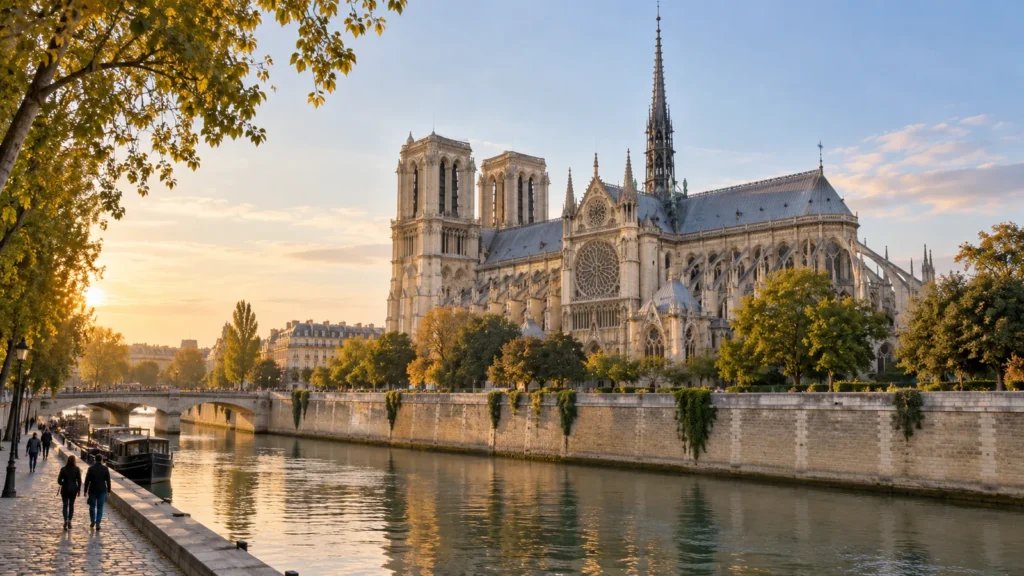
Enjoy views from both the square and the Seine. Begin at Parvis Notre-Dame, cross Petit Pont to the Left Bank and look back from Quai de Montebello. As of 26 October 2026, the City of Paris listed Square Jean-XXIII as closed for works. Check current restrictions before walking; this route does not rely on crossing the square.
From the bridges and Left Bank, the cathedral becomes part of Île de la Cité: stone, water, bookstalls, old façades and people moving through the city.
An outline for 1½–2 hours: the square before Notre-Dame, Petit Pont, Quai de Montebello with views of the cathedral and Île de la Cité, then Shakespeare and Company. It does not pass through Square Jean-XXIII. With more time, plan Sainte-Chapelle or the Conciergerie separately and check admission and access in advance.
Practical tips
Notre-Dame’s story is closely tied to Île de la Cité and early Paris. Our historic centre tour continues that story in the surrounding streets. The programme views Notre-Dame from outside; an interior visit is planned separately.
Dress respectfully for an active place of worship. Speak quietly, avoid flash photography and keep passageways clear. Services may limit access to some areas.
Morning light from the Seine and late light on the façade can be lovely for photographs. Leave time to look away from the camera too, as stone, water and city views come together around the cathedral.
After Île de la Cité, continue discovering old Paris in Le Marais. The articles below on the Métro, coffee breaks and a three-day itinerary help plan the rest of your trip.